Does the New Hemp Law Affect CBD Tinctures More Than Gummies?
Short answer: Not automatically. The new federal hemp rules could affect both CBD tinctures and gummies, and the key issue is generally the amount of covered THC in the entire container—not just the amount in one serving. A tincture may be easier to measure and reformulate, while gummies can make it easier to control each piece. But either format can run into trouble if its total THC exceeds the applicable limit.
That distinction matters because many shoppers compare products by the THC amount per dropper or gummy. A container-level cap changes the question: instead of asking only “How much THC is in a serving?” you also need to know “How much is in the whole bottle or package?”
This article explains the hemp definition changes, the difference between delta-9 THC and total THC, why THCA testing matters, and what the rules could mean for full-spectrum and broad-spectrum products. It is educational information, not legal advice. Federal implementation and state rules can change, so brands and retailers should confirm current requirements with qualified counsel and regulators.
What Does the New Hemp Law Change?
The federal change narrows the definition of hemp and places new limits on certain hemp-derived cannabinoid products. One important element is a cap of 0.4 mg of total THC per container for covered final products. The law also changes how THC is considered: compliance is not necessarily determined by looking only at delta-9 THC in isolation.
Plain-English takeaway: A product may no longer qualify simply because its delta-9 result is below 0.3% by dry weight; the updated framework looks at a broader THC picture and may impose a very small amount limit per finished container.
The 0.4 mg figure is a container limit, not a per-serving allowance. That means you should not assume that a product is compliant because each gummy or dropper contains less than 0.4 mg. For example, a package with several servings could exceed a container-level limit even when each individual serving appears low in THC.
There can also be separate questions about how “container” is defined, which products are covered, and when particular provisions take effect. Packaging format alone does not answer those questions. Companies should review the final statutory language, any agency guidance, and applicable state requirements before relying on a label or product design.
Delta-9 THC vs. Total THC: Why the Difference Matters
“Delta-9 THC” refers to a specific form of tetrahydrocannabinol. It is the figure many people recognize from hemp product labels and lab reports. “Total THC” is a broader measure intended to account for THC that may be present in different forms, including THCA, which can convert into delta-9 THC when heated.
For a hemp product, a label or COA that reports only delta-9 THC may leave out information important to a total-THC assessment. That is why buyers and compliance reviewers should check whether the certificate of analysis (COA) reports THCA and explains how the lab calculates total THC.
A common calculation used in testing is:
Total THC = delta-9 THC + (THCA × 0.877)
The factor reflects the expected loss in molecular weight when THCA is converted to delta-9 THC through decarboxylation. A lab’s method and the applicable legal definition should be checked rather than assumed. The key point is that THCA can matter even when a product’s delta-9 result looks low.
Why THCA Conversion and Testing Matter
THCA is the acidic precursor to delta-9 THC. Heat can convert THCA to delta-9 THC, and testing rules may account for that potential conversion when determining total THC. The precise treatment depends on the governing standard and test method.
That creates a practical quality-control issue: a COA listing delta-9 alone does not necessarily tell the whole story. Ask whether the lab tested for both delta-9 THC and THCA, whether the sample was tested in a way that captures the relevant cannabinoids, and whether the reported value is for the finished product in its retail form.
Plain-English takeaway: If the legal limit is based on total THC, a delta-9-only result is not enough to confidently assess compliance.
Does the Law Affect Tinctures More Than Gummies?
There is no universal answer. The law’s impact depends on a product’s formulation, serving count, package size, lab results, and how the container limit is applied—not simply whether the CBD is sold as a liquid or a gummy.
Product format What to check Potential compliance challenge CBD tincture Total THC in the full bottle, serving size, and COA results for delta-9 THC and THCA A bottle contains many measured servings, so small amounts per serving can add up across the container. CBD gummies Total THC in the entire pouch or package, number of pieces, and per-piece results A package may contain multiple gummies, so per-gummy results alone do not establish the container total.
Why Tinctures May Need a Closer Look
Tinctures often contain many servings in one bottle. A shopper may take one dropper at a time, but the relevant federal measure may apply to the whole retail container. If a product has a measurable amount of THC in each serving, that amount can accumulate across the bottle.
Liquids can also require careful batch controls because cannabinoids may not be perfectly uniform unless the product is mixed and tested appropriately. Brands should confirm that the tested sample represents the finished, packaged tincture and not just an ingredient or an early-stage blend.
For consumers, the practical move is to look beyond the serving-size panel. Check the package’s total amount, the cannabinoid content per serving, and the COA for the corresponding batch. If the COA gives only a concentration without enough information to calculate the total amount in the container, ask the manufacturer for clarification.
Why Gummies May Need a Closer Look
Gummies can make dosing more consistent when each piece is manufactured and tested to a reliable specification. But a pouch with multiple pieces is still one retail package for purposes of a container-level cap, if that is how the rule applies. Ten gummies with a small amount each may collectively contain more THC than the cap allows.
Manufacturing variation is another consideration. A lab result for one sample does not necessarily prove every gummy has identical cannabinoid content. Brands need validated production controls and appropriate finished-product testing—not just a recipe that is expected to meet a target.

So, gummies are not automatically safer from a compliance standpoint. They can be easier to portion, but the total amount across the package remains important.
What Does “0.4 mg THC per Container” Mean for Shoppers?
The phrase 0.4 mg THC per container is a total-amount limit, not a statement that each serving may contain 0.4 mg. A product with several servings should be evaluated across the full package under the applicable definition of “container.”
For example, do not compare a tincture’s “THC per dropper” directly with a gummy’s “THC per piece” and assume the lower number wins. To make a fair comparison, you need the total THC amount in the bottle or pouch and a COA that supports the result.
- Find the serving size and number of servings.
- Check whether the label reports THC per serving, per package, or both.
- Review the batch-specific COA and confirm it includes delta-9 THC and THCA when relevant.
- Ask whether the reported total accounts for the calculation required by the applicable rule.
- Do not treat “below 0.3% delta-9 THC” as proof that a finished product meets a separate total-THC container cap.
What Happens to Full-Spectrum and Broad-Spectrum CBD?
Full-Spectrum CBD and Total THC
Full spectrum CBD total THC is a particularly important phrase to understand. Full-spectrum products are generally formulated to retain a range of hemp compounds, which may include measurable THC. That does not mean every full-spectrum product has the same amount, and the label alone is not a substitute for a batch-specific lab report.
If a product’s total THC exceeds the applicable limit, calling it “full spectrum” does not create an exception. Companies may need to reformulate, reduce THC, change package size or serving count, or discontinue a product depending on the law and their regulatory advice.
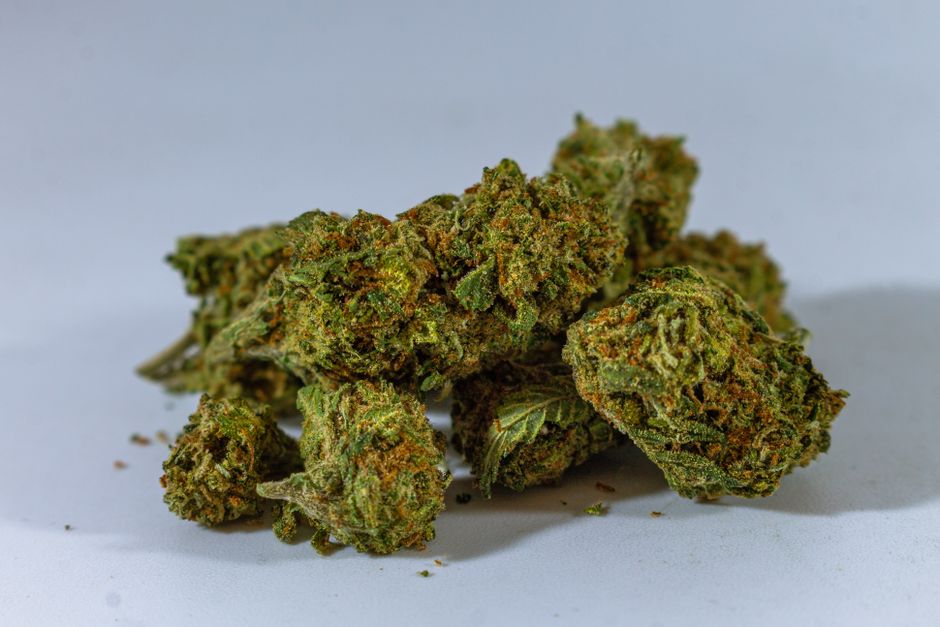
Consumers should be cautious about broad claims such as “legal everywhere” or “compliant because it is hemp.” The federal definition, product restrictions, implementation dates, and state rules all matter.
Broad-Spectrum CBD and THC-Free Claims
Broad spectrum CBD THC-free is often used to describe products from which THC has been removed, while retaining other hemp-derived compounds. But “THC-free” should be supported by testing, not just a marketing statement. In practice, a lab may report THC as “non-detect” or below its limit of quantitation, and those terms are not identical to proof that absolutely no THC is present.
Look at the COA’s reporting limits and test panel. If the report does not show delta-9 THC and THCA—or does not clearly explain what “non-detect” means—it is difficult to assess the claim. A broad-spectrum label does not, on its own, prove that the product meets a legal threshold.
How to Read a COA for Tinctures and Gummies
A certificate of analysis is useful only if it matches the product you have and reports the information needed for the question you are asking. The batch number on the package should match the batch number on the COA. The test date and sample description should also be relevant to the finished product, not merely to a raw ingredient.
- Match the batch: Confirm that the COA corresponds to the lot printed on the tincture bottle or gummy package.
- Check the cannabinoid panel: Look for delta-9 THC and THCA, as well as CBD and other listed cannabinoids.
- Read the units: A result in mg/g, mg/mL, percentage, or mg per serving cannot be compared without converting units correctly.
- Calculate the container amount: Use the lab’s results and the product’s net contents or serving count, where the information allows it.
- Review detection limits: “Non-detect” means the result is below the lab’s reporting threshold; check what that threshold is.
- Confirm the testing scope: Ask whether the lab performed third-party lab testing on the finished, packaged product and whether the method is suitable for the reported analytes.
Third-party lab testing is an important quality tool, but it does not automatically make a product legal, safe for every person, or compliant in every state. A test report is evidence about the tested sample under a particular method; it is not a blanket approval of the product or its marketing claims.
What Should CBD Brands and Retailers Do Now?
For manufacturers, the change calls for a product-by-product review rather than a format-wide assumption. A tincture portfolio and a gummy portfolio may need different calculations and quality controls, but both should be assessed at the full-container level where required.
- Inventory every SKU, package size, serving count, and cannabinoid formulation.
- Confirm how the law defines covered cannabinoids, total THC, and a retail container.
- Update testing specifications to include relevant THC forms, including THCA.
- Verify that COAs and labels communicate results in consistent units.
- Review “THC-free,” “full spectrum,” and compliance claims with legal and regulatory advisers.
- Check state rules, which may differ from or add to federal requirements.
Companies such as Joy Organics, like other CBD brands, should be evaluated by the same practical measures: product-specific documentation, clear labeling, and accessible testing information. A brand name or product category is not a substitute for reviewing the actual formulation and batch records.
The Bottom Line
The new hemp law does not inherently target tinctures more than gummies. It shifts attention toward what is in the finished usaenlinea.com container, including the total THC picture rather than delta-9 THC alone. Tinctures may contain many servings in one bottle; gummies may contain many individually portioned pieces in one pouch. Either format can exceed a container-level cap.
One-sentence takeaway: Compare the full-container THC amount—not just THC per dropper or gummy—and use a batch-specific COA that accounts for both delta-9 THC and THCA before trusting a compliance or “THC-free” claim.